

News & Insights
Photo courtesy of: Greg Land
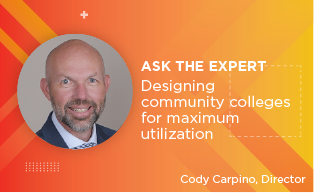
How campuses can increase space efficiency, drive revenue, and serve as community hubs
Community colleges have long opened their doors to the communities they serve, offering spaces that extend beyond the classroom. What’s changing now is a more intentional approach—designing campuses from the outset with community usein mind. As those expectations evolve, leaders are rethinking how to optimize their physical assets and create spaces that foster a stronger sense of belonging. This month, B&D Director Cody Carpino, who is also a licensed architect, shares his perspective on how community colleges can evolve into true civic hubs.
B&D: What does “maximum utilization” mean, and what does that actually look like on a community college campus?
Cody Carpino: Community colleges are inherently accessible. Spaces are often open extended hours, and the line between student, staff, and community use is blurred. Maximum utilization, in practice, means these spaces are active and serving multiple audiences. The key is that campuses function as shared environments, not just for students, but for the broader public.
B&D: When designing spaces intended for community use, what should take priority?
CC: Flexibility is the single most important factor. Communities are changing rapidly, and we have to design spaces that can grow with them. In practice, that means flexible classrooms with operable walls that can expand or contract, “sticky spaces” or hubs where students and community members naturally gather, and multi-use facilities like welcome centers that support everything from informal meetings to organized programming. Ultimately, good design doesn’t just allow use but it invites it.
B&D: Looking ahead, how do you see community college campuses evolving?
CC: I think they’ll increasingly function like community anchors, similar to libraries, recreation centers, or even small-scale event districts. The goal is to become a place people actively choose to go. That could mean a great library or study environment, accessible recreational facilities, inviting outdoor spaces, and programming that extends into evenings, weekends, and summers. To do this, leaders need to think beyond “campus as school” and toward “campus as destination.”
Thank you again to Cody for his participation in Ask the Expert. If you have a topic you’d like one of our experts to cover in a future issue, submit them here.


