

News & Insights
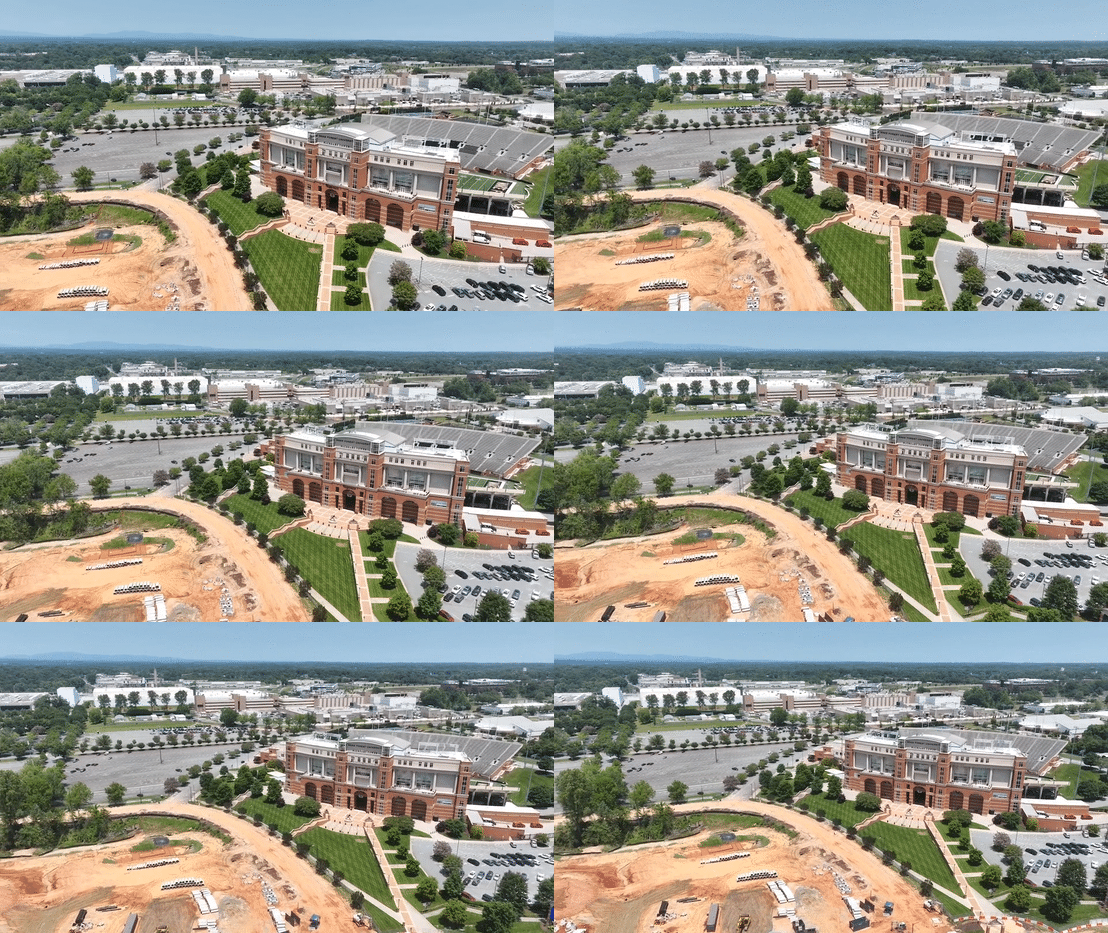
Photo courtesy of: Greg Land
How collegiate athletics is rethinking about growth and investment
For the past several years, the new requirement for revenue sharing in collegiate athletics has been framed as the defining disruption within the industry. However, revenue sharing is not the story. It is a catalyst revealing something deeper: a heightened focus on asset and operational optimization, or doing more with existing resources and finding new, creative ways to expand a department’s revenue pie.
WHAT THIS MEANS: Revenue sharing has highlighted visible tradeoffs that have always existed. Athletic departments have long had to balance cost pressures related to facility enhancements, operations, and athlete support. That has not changed. Rather, the increased financial pressure resulting from revenue-sharing requirements has accelerated the need for new revenue sources and intensified the decision-making required to prioritize potential initiatives.
As a result, many athletic departments are now focused on optimizing revenue opportunities tied to existing assets, underutilized assets, and assets that do not yet exist. At the same time, schools are exploring outside investment to support both athlete-related needs and broader operational priorities. The takeaway is simple: any capital introduced must generate a return.
For athletic venues in particular, it is no longer sufficient to simply be necessary; they also must perform financially. Stadiums are being activated as performance venues, adjacent parking lots are being transformed into mixed-use entertainment districts, and departments are identifying new ways to engage passionate fan bases through premium seating experiences and year-round engagement opportunities, among other initiatives. Given this new reality, any new project or venue initiative must not only help recruit, support, and retain top athletes, but also strengthen the long-term financial position of the athletic department.
The rise of mixed-use collegiate athletic districts is a clear example of, and direct response to, this new reality. By expanding beyond the venue footprint, institutions such as the University of Tennessee, the University of Texas, Ole Miss, and Wake Forest are tapping into retail, hospitality, residential, and other uses that create more stable and diversified revenue streams while also advancing defined strategic objectives. More common in professional sports, as evidenced by The Battery Atlanta and Deer District, this model is quickly gaining traction and becoming an increasingly important tool for athletic departments.
From this perspective, recent changes in revenue sharing are simply accelerating trends that were already in motion and forcing institutions to become more intentional about how they optimize internal resources and evaluate new opportunities to achieve both strategic outcomes, such as recruitment, donor engagement, and fan experience, and financial performance objectives.
The institutions that emerge ahead will be those that can optimize available resources and opportunistically attract new forms of recurring revenue. At B&D, we see this moment not as a call for reaction, but as a call for creativity and discipline. If you are a collegiate athletics leader, here are five concepts to keep in mind:
Ultimately, the institutions best positioned for long-term success will be those that view this moment not as a short-term financial challenge, but as an opportunity to rethink how collegiate athletics assets are designed, activated, and monetized. Revenue sharing may have accelerated the conversation, but the broader shift is toward more strategic, performance-oriented decision-making. Institutions that embrace innovation, maintain financial discipline, and align investments with both competitive and operational goals will be better equipped to thrive in the evolving collegiate athletics landscape.
Joe Winters is a Senior Vice President at Brailsford & Dunlavey, where he advises higher education institutions, municipalities, and private-sector clients on the planning and development of complex, mission-driven facilities and mixed-use projects. With a background spanning architecture, business, finance, and development, he specializes in helping organizations align long-term strategic objectives with financially sustainable investment decisions. He can be reached at jwinters@bdconnect.com.


