

News & Insights
Photo courtesy of: Greg Land
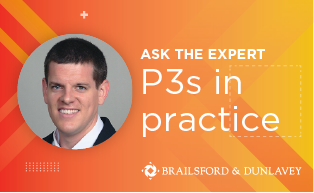
Colleges and universities are under real pressure to update aging facilities, adjust to enrollment changes, and make limited capital go further. In this edition of Ask the Expert, B&D’s Eric Richard shares how public-private partnerships, or P3s, can help institutions move forward.
B&D: Tell us about yourself.
Eric Richard: I’m trained in urban planning and development and started my career in the public sector, working in planning and economic development for a suburban Chicago municipality. At B&D, I now lead planning and advisory work for higher education clients, including student housing, dining, recreation, and mixed-use campus-edge projects.
B&D: At a high level, how should institutions think about P3s?
ER: A P3 brings private capital and expertise into a project and shifts certain risks from the institution, like financing, construction, or operations, to a private partner. One common misconception in higher-education P3’s is that all risk goes away. It doesn’t. The institutions that see the most success in these projects are clear about which risks and controls they need to keep to reach their long-term goals.
B&D: What makes a P3 work over the long term?
ER: It really comes down to how the partnership is set up from the beginning. Clear governance, communication strategy, and strong legal agreements matter, especially ones that anticipate change or uncertainty. Having the right advisors and project partners in place from the beginning helps create a successful structure that can hold up from pre-development and through the life span of the asset.
B&D: Can you think of a great example of P3 execution?
ER: The University of Akron’s P3 project is a terrific way to show what’s possible. Instead of focusing on new construction at a growing institution, this project leverages the P3 model to reinvest in existing assets at a mid-sized public university with stable enrollment. It shows that P3s are not just for flagship campuses. With the right approach, many institutions can use this model to move forward.
Thanks to Eric for sharing his perspective. Have a topic you would like us to cover in a future edition of Ask the Expert? Submit your ideas here.


