

News & Insights
Photo courtesy of: Greg Land
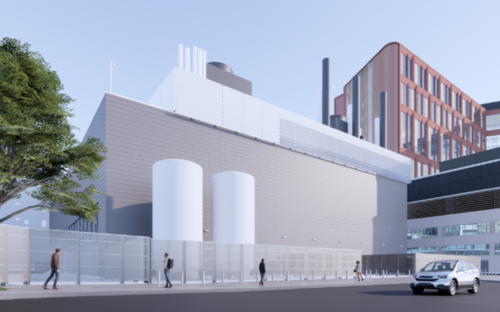
Photo credit: University of Kentucky News
In June, Kentucky played host to not one, but two university projects reaching financial close. Both closed on the same day – but were quite different schemes in different parts of the state.
One was the Western Kentucky University Student Housing P3 project – typical of many happening around the country where higher education institutions seek private partners to revamp or expand their accommodation provision for students.
The other was the Central Utility Plant Project at the University of Kentucky, which will see it use P3 to help meet future demand and improve energy efficiency at the site.
As one source put it, there’s “lots of exciting things happening in Kentucky”.
However, when it comes to higher education, it’s not just Kentucky: the state’s university projects are a microcosm of the sector across the US, with a variety of projects progressing at present and a healthy pipeline of opportunities.
Just this year, P3 Bulletin’s Global Projects Tracker has seen no fewer than 17 higher education projects make some form of step forward in the six months to the end of June. Of those, five deals were signed in that period, demonstrating that these are bankable opportunities with a clear path to getting shovels in the ground.
And this is a market that still has plenty of future life left in it: a further four projects moved into the preferred bidder or predevelopment phase, leaving the bulk of deals at some stage of procurement – meaning there is a healthy list of opportunities for investors to consider.
The vast majority of higher education P3s are student accommodation and campus-style developments, accounting for 15 of the projects moving through the Projects Tracker in the first half of this year.
There are good reasons for this as a driver of activity. “The state of dorms is still quite shocking across the country,” says Steve Park, partner at law firm Barnes & Thornburg.
“Schools are in a constant race for students: more and more, enrolment figures are down, because there are fewer young people choosing to go to college. So universities have to do more to market themselves overseas and part of that is doing more work on their accommodation.”
Furthermore, universities have begun to realize the need to change. “Schools have had a broken business model that has been too reliant on tuition increases, which, for many schools, has reached a tipping point in the last few years,” explains Jeff Turner, president of higher education at advisory firm Brailsford & Dunlavey. “They can’t keep up with deferred maintenance. P3s are a good avenue to generate more revenue: schools are often land rich and cash poor. The world has changed over the last 10 years, with [university] leadership now being more open to new ways of doing business.”
There are also twin drivers for student accommodation: expansion and renewal. As Lindsay Stowell, managing director at Rieth Jones Advisors, explains, those universities that continue to do well are keen to ensure their entire housing stock is up to scratch. “Many are building new and renovating their existing stock within the same P3 transaction,” she says.
This also lends itself well to a P3 play, because the private partner can help to provide an overall view of the program, offering a masterplanning role that can bring efficiencies.
Student accommodation is now a model that is also well understood by P3 practitioners – not just in the US but around the world. Investors and developers recognize and understand the process, and the buildings themselves are far less complex than, say, an energy facility.
“The student housing P3 market is mature and in most cases doesn’t have an over-complicated design,” says Turner.
As a result, the major projects are now attracting the big P3 players, who recognize that the asset class is a strong option in a world where there are still relatively few major social infrastructure P3 opportunities.
One variation on the straightforward student housing P3 has been so-called innovation districts. In July, Wake Forest University School of Medicine, North Carolina, released a request for qualifications (RFQ) on a mixed-use innovation center project to redevelop a 30-acre plot in Winston-Salem into a medicine and biomanufacturing campus.
The idea with these types of initiatives is that the P3 partner can provide the upfront capital to build premises that will provide a revenue stream for the university in the future, not just through student housing, but also the companies that locate there, as well as potential retail and leisure outlets to support the ecosystem of students and scientific experts.
George Mason University’s digital innovation hub P3, which signed in 2022, has been a poster child for this approach. “We purposely designed the building to force collaboration,” said Geoff Stricker, co-founder of Edgemoor, which delivered the project. In an article celebrating the firm’s 25th anniversary, he added: “What you find is that people working on different applications suddenly begin talking and realize that combining their ideas could lead to something entirely new.”
However, for all the positive impact that these kind of initiatives can have, innovation districts remain the exception, rather than the norm.
“They are harder because the revenue stream is less clear,” explains Park, pointing out that revenues are dependent on finding organizations willing to site themselves there. “The more mixed-use type of deals need to be availability payments [rather than user pays] because you can’t predict that long-term revenue.
“These deals will come along occasionally, but they’re not as big compared to student accommodation which is much more tried and tested.”
A related concept is the entertainment district, where universities use their land around a sports stadium, for example, to deliver a vibrant community. “The key is to make them more than just about the game-day experience, but to activate the campus on non-game days and drive visitors to campus,” says Turner.
He highlights the increasing interest in hotels as part of this development, and points out that this can also provide wider benefits for the university, for example by opening up the potential for a hospitality program or culinary program that uses the hotel and its restaurant facilities.
These approaches are garnering plenty of interest across the country – but Stowell notes that these deals have to be properly calibrated to fit the area in which they will sit.
“Some projects may not be possible without university support, for example, as an anchor tenant or taking some retail risk,” she explains. “The question that the university must ask is: what is the missing element in the community that would drive people to the site outside of game days?” For some, it may be a new sports facility; for others, a greater focus on retail – but in any situation it may be that the student housing play needs to come first in order for there to be a community that needs serving.
This will often require an ongoing and open conversation with private partners, which is why Stowell adds that universities looking to develop these types of opportunities “will be well positioned if they select developers who are comfortable with the local market real estate dynamics”.
Higher education energy P3s have not been the big area of growth that many had predicted. Just one of the higher education projects moving through the Project Tracker this year was an energy deal – and that signed earlier this year.
One reason for this may be that the initial excitement around the sector has not translated into the results that some of the early adopters had hoped for. High-profile disagreements such as the University of Iowa’s dispute with its private partner may have put others off. While that dispute did reach a settlement, the ripples may have been enough to put other institutions off going down a similar route.
Nonetheless, most in the industry believe that a small number of energy projects will continue to come through – and if more prove to be successful that could start to grow further in the years ahead.
“We will see more come out to market, but they will be different to those of the past which focused on monetization and schools getting an upfront check,” says Turner. “The market is adapting, and has shifted more into energy-as-a-service (EAAS) and thinking more about it across the lifecycle.”
“I would imagine we will see more universities dip back into energy through EAAS agreements in the future,” agrees Park.
The move to EAAS has been taken up more enthusiastically in the healthcare space, and as a result providers have moved to these projects, which are often not as large as university energy schemes and therefore have a lower risk attached to them.
Energy projects could also be bundled into wider campus development programs, as institutions look at ways to cut their emissions and ensure a level of resilience and grid independence.
Overall, the opportunities for P3 in university projects looks set to continue for a long time to come. Changing demographics are only forcing institutions to improve the quality of their offerings in order to compete more effectively, while tight funding constraints make private finance an attractive option in many cases.
Turner adds that many institutions are now more open to a more progressive P3 approach, meaning they will work with advisors up front and be willing to enter into predevelopment agreements to figure out exactly what they want to build. “Schools have embraced the progressive P3 model and understand that it is a partnership,” he says. “Schools understand that they need to hire advisors early and pay for planning work, versus just putting a generic RFP on the street and doing a ‘fishing expedition’.”
Read the full article here.


